Culture & History · 7 min read
Things you use every day that quietly come from Yorkshire
Cat's eyes, stainless steel, the chocolate orange, the penny bazaar — the everyday things invented or made in Yorkshire that nobody credits to the county.
Yorkshire Unlocked · November 2026
Yorkshire is not shy about its history, but most of what the county actually gave the world is quietly sitting in your kitchen, your car and your sweet tin without a label on it. Here are the everyday things that started here.
On the road
Cat's eyes. The reflective road stud that keeps you in lane on an unlit road was invented by Percy Shaw of Halifax in the early 1930s, after driving home one foggy night and noticing his headlights caught a cat's eyes at the roadside. He built a rubber housing that self-cleaned as cars ran over it and put a cast-iron base under it. They are still the standard road marker in Britain and in much of the world, and the design has barely changed in ninety years.
In the kitchen
- Stainless steel. Harry Brearley, working in Sheffield in 1913, was trying to make a better rifle barrel and produced a steel that would not rust. The city's cutlery trade took it up, and every kitchen in the world has been using it since.
- Yorkshire Tea. Blended in Harrogate by Taylor's since 1886. The county's most exported habit.
- Henderson's Relish. Sheffield's own answer to Worcestershire sauce, made to the same recipe since 1885 and still vegetarian, which the other one is not.
- Pontefract cakes. Liquorice was grown around Pontefract from the seventeenth century, and the small round cake stamped with a castle has been made there ever since.
- Wensleydale. A cheese the Cistercians were making at Jervaulx in the Dales long before a plasticine man made it famous. Crumbly, sharp, and best with fruit cake.
- Forced rhubarb. The candlelit sheds of the Rhubarb Triangle between Wakefield, Morley and Rothwell grew the pink winter rhubarb that stocked the country's markets. It still has protected status.
In the shop
The penny bazaar that became Marks & Spencer. Michael Marks set up a stall in Leeds Kirkgate Market in 1884 with a sign reading "Don't ask the price, it's a penny". Ten years later he went into partnership with Thomas Spencer, and the stall became the chain on every high street.
Morrisons began in 1899 with William Morrison selling eggs and butter from a stall in Bradford. Asda grew out of Associated Dairies in Leeds in 1949. Three of Britain's biggest grocers, all from within twenty miles of each other.
In the sweet tin
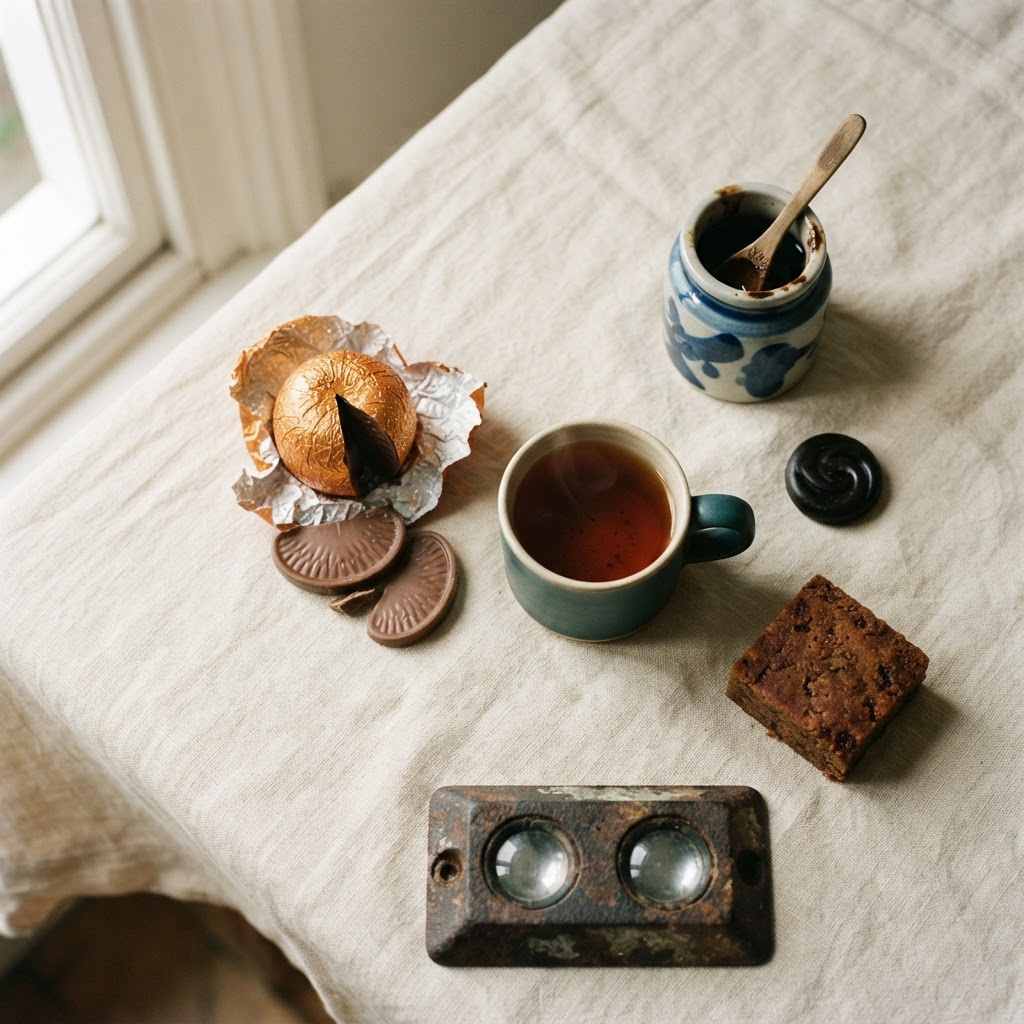
- Terry's Chocolate Orange. Made in York from 1932. The whack-on-the-table instruction is not marketing invention; the segments genuinely need it.
- The Kit Kat. Rowntree's of York launched it in 1935 as the Chocolate Crisp and renamed it two years later.
- Smarties. Also Rowntree's, sold as Chocolate Beans from 1882 and renamed in 1937.
- Quality Street. Mackintosh's of Halifax, 1936, named after a play and sold in a tin designed to be kept and used for buttons for the next forty years.
- Fox's biscuits. Baked in Batley since 1853.
Most of the county's inventions were made by people trying to solve a small local problem — a dark road, a rusty blade, a hungry city. The export happened afterwards.
On the pitch
Football as we know it. Sheffield FC, founded in 1857, is the world's oldest football club, and the Sheffield Rules they played — corners, free kicks, heading the ball — shaped the game before the London clubs agreed a national code. The city still has the oldest ground in the world at Sandygate.
Rugby league. The split that created it happened in 1895 at the George Hotel in Huddersfield, when the northern clubs broke away over payments to players who lost wages by playing. Yorkshire has been the heartland ever since.
And the county's cricket side has won more County Championship titles than anyone else, which is the sort of fact you are only allowed to mention if you are from here.
Where to see it
Most of this is not in a museum, which is the joy of it. Drink the tea, eat the cake, drive over the cat's eyes on the way home. If you want the industrial version of the story, our piece on the county's industrial past covers what you can still walk through, and the things to do guide has the museums worth the ticket.
Keep reading